What Does AML Mean in Cryptocurrency
AML stands for Anti-Money Laundering. In crypto, it means applying compliance rules to detect and block illicit fund flows on blockchain networks. Traditional finance has used AML for decades; crypto exchanges and blockchain analytics firms adapted these practices to track digital assets. An AML crypto check examines whether a wallet or transaction is connected to known risk categories: mixers, darknet markets, stolen funds, sanctioned entities, gambling platforms, or scams. Unlike traditional banking, where transactions are opaque, blockchain is transparent—every transaction is recorded on a public ledger. This transparency makes AML screening both easier and more critical. Regulators and exchanges now require AML compliance, meaning they must screen wallets and flag suspicious activity. If your wallet receives funds from a flagged source, exchanges may freeze your account or require you to prove the funds are legitimate.
How Does AML Scoring Work for Crypto Wallets
An AML risk score is a numerical rating assigned to a wallet based on its transaction history and connections. Blockchain analytics firms trace coin movements backward and forward, building a profile of each address. The scoring process examines:
- Direct sources—where coins came from originally;
- Counterparty risk—whether the wallet has interacted with known high-risk addresses;
- Behavior patterns—mixing activity, rapid transfers, or dormancy;
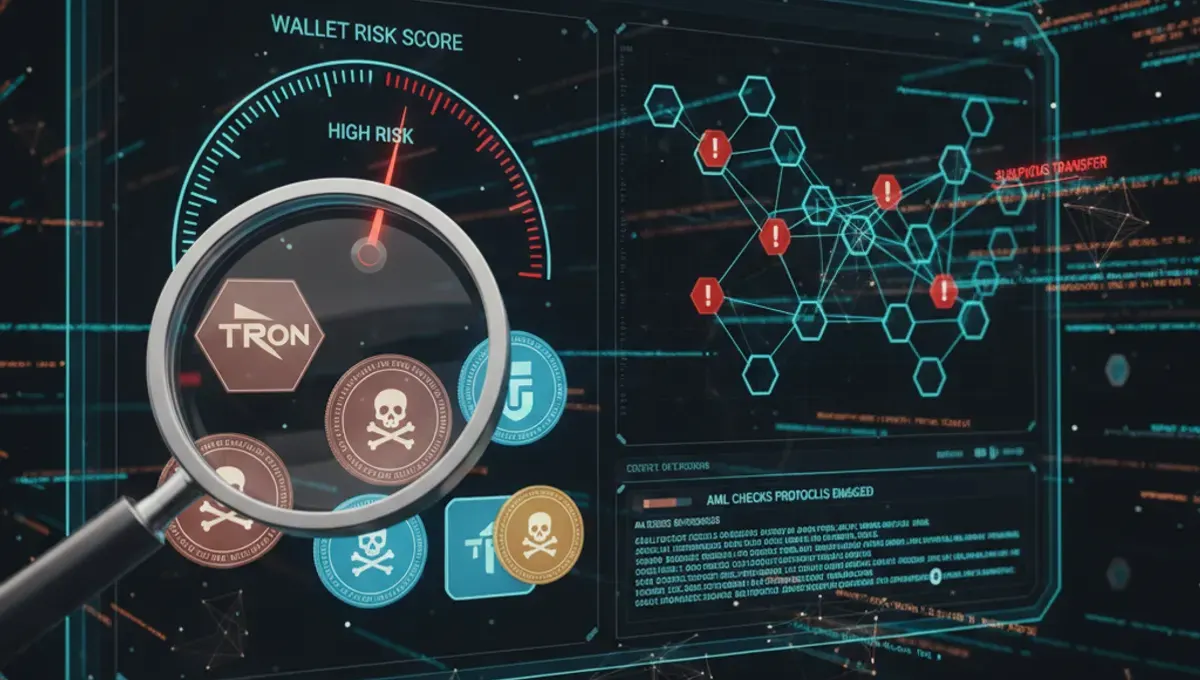
- Sanctions lists—whether the wallet is linked to sanctioned entities or jurisdictions. Risk scores typically range from 0 to 100, with higher scores indicating greater risk. A score of 0–20 is generally considered low risk; 20–50 is medium; 50+ is high risk. Exchanges and institutional buyers often reject coins with scores above 50. The scoring is not permanent—a wallet's risk can change if it receives new funds or if blockchain analysts update their data. This is why checking a wallet before receiving USDT or TRX is important: you avoid accepting coins that will be flagged later.
What Are Red Flags in AML Crypto Screening
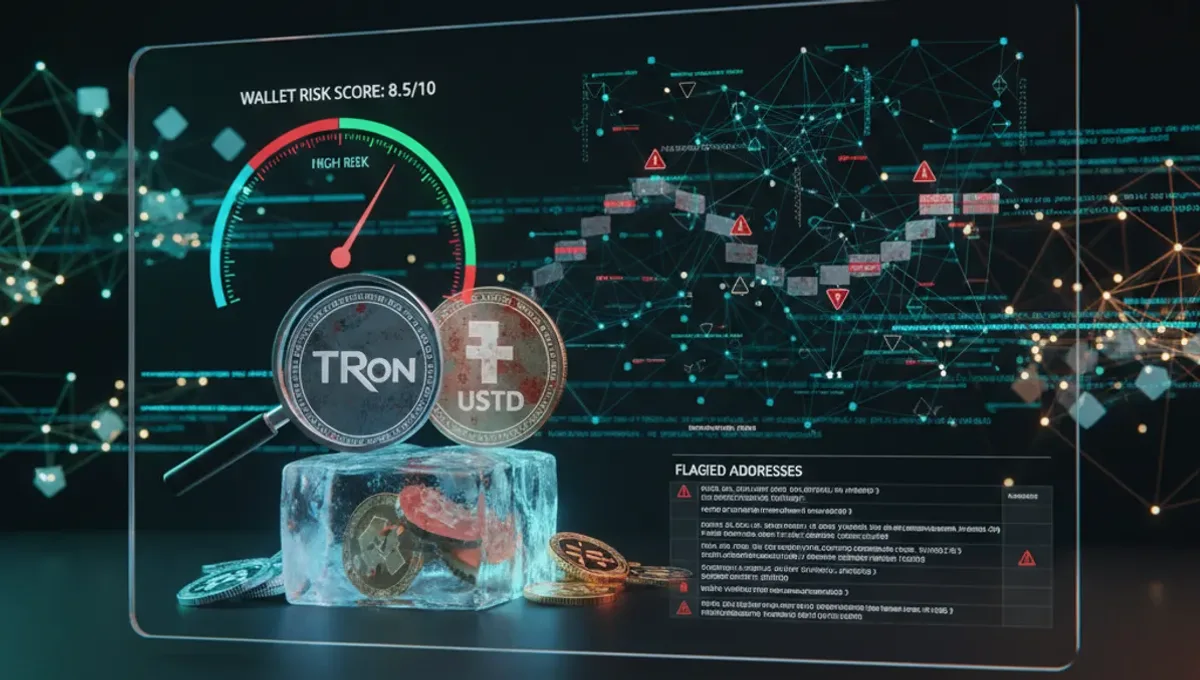
Red flags in AML crypto detection signal that a wallet or transaction may be connected to illicit activity. Common red flags include: Mixer involvement—coins that have passed through privacy mixers are harder to trace and often flagged as high-risk. Darknet market exposure—wallets linked to known darknet marketplaces trigger immediate alerts. Stolen funds—coins traced back to exchange hacks, wallet theft, or ransomware. Sanctioned addresses—wallets connected to individuals or entities on government sanctions lists. Rapid movement—coins moved quickly through multiple wallets in a short time, suggesting an attempt to obscure origin. Gambling platform connections—coins linked to unregulated gambling sites. Scam associations—funds from known Ponzi schemes, rug pulls, or phishing attacks. Frozen USDT—Tether has frozen USDT tokens linked to high-risk wallets, making those coins unspendable on many exchanges. A single red flag doesn't always mean a wallet is criminal, but it increases scrutiny. For example, a wallet may have received coins from a mixer by accident. However, exchanges and institutional buyers treat red flags conservatively—they often reject flagged coins rather than investigate further.
How to Check a Tron Address or Bitcoin Wallet for AML Risk
Checking a wallet for AML risk before receiving funds is straightforward. Here's the process:
- Obtain the wallet address—copy the full address of the wallet you're considering. For Tron addresses, they start with 'T' and are 34 characters long; Bitcoin addresses start with '1', '3', or 'bc1'.
- Use an AML check service—visit a trusted blockchain analytics platform or AML screening tool. Our curated list of verified AML services on this site includes tools that scan Tron addresses, Bitcoin, Ethereum, and other chains for risk.
- Enter the address—paste the address into the screening tool.
- Review the risk score and report—the tool will return a risk score, flagged categories, and transaction history.
- Decide whether to accept—if the score is low (0–20) and no major red flags appear, the coins are likely safe. If the score is high (50+) or multiple red flags are present, consider declining the transaction. This AML crypto check takes seconds and protects you from receiving tainted coins that exchanges will later freeze or reject.
What Happens When Crypto Is Flagged as Dirty or Tainted
When coins are flagged as dirty or tainted, several consequences can follow. First, exchanges may refuse to accept them. If you deposit flagged coins into a major exchange, the platform's compliance team will detect the risk score and may freeze your account pending investigation. You'll be asked to prove the source of the funds; if you can't provide a legitimate explanation, the exchange may permanently ban your account and seize the coins. Second, the coins may become unspendable. Tether, for example, has frozen USDT tokens on the Tron network that were linked to high-risk wallets, making those tokens permanently locked. Third, you may face regulatory scrutiny. If you knowingly receive stolen or sanctioned funds, you could face legal liability depending on your jurisdiction. Fourth, your reputation suffers. If you're a business or institution, being associated with tainted coins damages trust and compliance standing. The best defense is to check wallets before accepting funds. Use an AML check crypto service to verify the source and risk profile of incoming coins. If a transaction looks suspicious, decline it. It's far easier to refuse tainted coins upfront than to deal with frozen accounts or legal complications later.
What Is a Safe Crypto Wallet and How AML Screening Fits In
A safe crypto wallet is one that minimizes exposure to illicit funds and regulatory risk. Safety has two dimensions: technical security and compliance. Technical security means using a wallet with strong encryption, backup options, and protection against theft—whether a hardware wallet, a reputable exchange wallet, or a non-custodial mobile wallet. Compliance safety means avoiding tainted coins and high-risk counterparties. A safe crypto wallet owner checks incoming funds before accepting them, avoids mixing services, and keeps transaction history clean. AML screening is part of compliance safety. Before receiving a large transfer, use an AML check crypto service to verify the sender's wallet. If you're holding coins long-term, periodically check your wallet's own risk score to ensure you haven't inadvertently accumulated flagged assets. If you're a business accepting crypto payments, implement AML screening into your payment flow—check customer wallets and incoming transactions before settlement. This practice protects you from frozen accounts and regulatory penalties. The combination of technical security (strong wallet software) and compliance screening (AML checks) creates a safe crypto wallet environment.
AML Compliance and Exchange Account Freezes
Exchanges enforce AML compliance by screening deposits and flagging high-risk wallets. When you deposit coins into an exchange, the platform's compliance system automatically scans the coins' history and assigns a risk score. If the score exceeds the exchange's threshold (often 50 or higher), the deposit may be held for manual review. During review, the exchange may ask you to provide proof of the funds' origin—transaction records, invoices, or other documentation. If you can't prove legitimacy, the exchange may reject the deposit, freeze your account, or seize the coins. This process is called Know Your Transaction (KYT) screening. Major exchanges like Kraken, Coinbase, and Binance all perform KYT on incoming deposits. Some exchanges are stricter than others; smaller or decentralized exchanges may have weaker AML controls. However, even decentralized exchanges increasingly use AML tools to flag risky transactions. The key takeaway: exchanges will freeze your account if you deposit tainted coins. Avoid this by checking wallets before sending funds and by using verified AML services to screen your own wallet periodically. Our site's curated list of AML services includes tools trusted by exchanges and institutions for this purpose.
Frequently asked questions
Can I receive crypto from a wallet with a high AML risk score
You can receive it, but it's risky. If the wallet has a high AML risk score (50+), the coins may be flagged as tainted. When you deposit them into an exchange, the platform may freeze your account and ask for proof of the funds' origin. If you can't prove legitimacy, the exchange may seize the coins. It's safer to decline transactions from high-risk wallets.
What is the difference between AML and KYC in crypto
AML (Anti-Money Laundering) screens transactions and wallets for illicit activity and risk. KYC (Know Your Customer) verifies the identity of individuals using crypto services. Exchanges use both: KYC to confirm who you are, and AML to check whether your transactions are legitimate. Together, they form a compliance framework.
How do I check if my Tron address has been flagged
Use an AML check crypto service to scan your Tron address. Enter your address (starting with 'T') into a blockchain analytics tool or AML screening platform. The tool will return your wallet's risk score, any flagged categories, and transaction history. If your score is low and no major red flags appear, your wallet is safe. If flagged, review the report to understand the risk.
What does a low AML risk score mean for a Bitcoin wallet
A low AML risk score (0–20) means the wallet has a clean transaction history with no known connections to illicit activity, mixers, darknet markets, or sanctioned entities. Low-risk wallets are accepted by exchanges and institutional buyers without hesitation. A low score doesn't guarantee the wallet is legitimate, but it indicates minimal compliance risk.
Can frozen USDT be unfrozen or recovered
Frozen USDT on the Tron network is typically permanent. Tether freezes tokens linked to high-risk wallets, sanctions violations, or theft. Once frozen, the tokens cannot be transferred or spent. If your USDT is frozen, contact Tether support with proof of legitimate ownership, but recovery is rare. Prevention—checking wallets before receiving USDT—is the best approach.