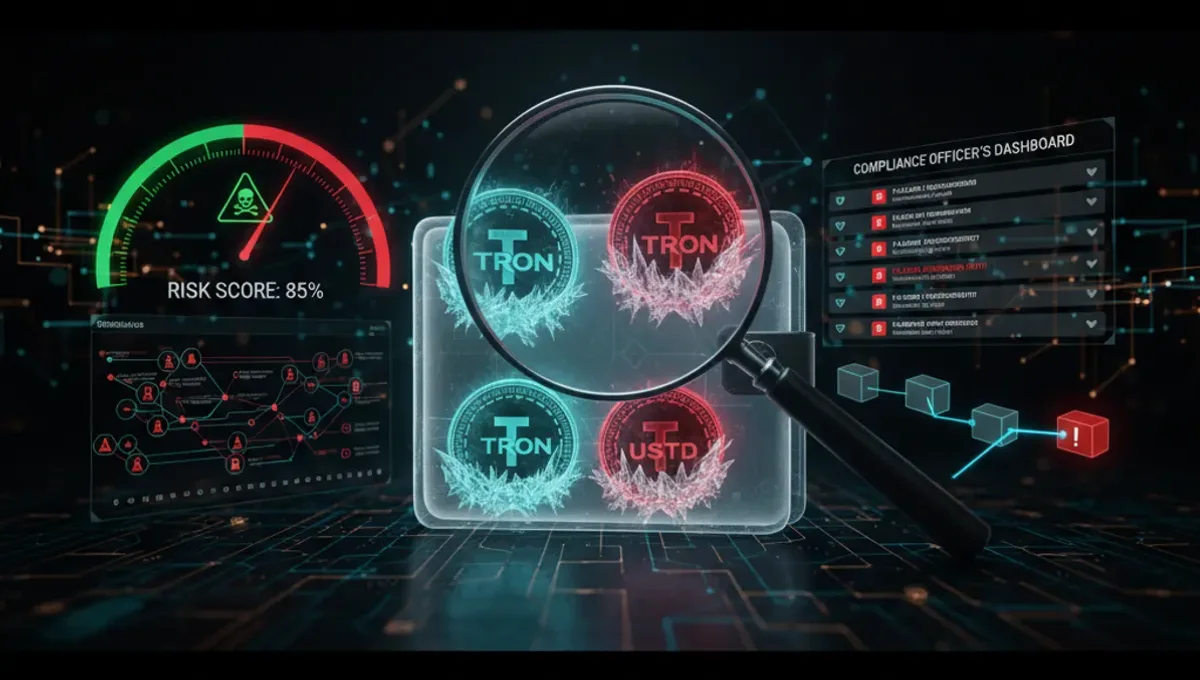
What Is an AML Crypto Check and Why Does It Matter
An AML crypto check screens a wallet address against known risk indicators: stolen funds, darknet market activity, mixer usage, scam proceeds, and sanctioned entity involvement. AML stands for anti-money laundering, a compliance framework used by exchanges, custodians, and financial institutions to prevent illicit activity. When you receive cryptocurrency, the coins carry a transaction history. If those coins were once mixed, stolen, or tied to a sanctioned address, exchanges may freeze your account or flag your funds as high-risk. A free AML crypto check reveals this history before the coins reach your wallet, letting you decide whether to accept them. Compliance teams and traders use these checks to avoid regulatory penalties and account freezes.
How Does AML Scoring and Risk Levels Work
AML scoring assigns a numerical or categorical risk rating to a wallet based on its transaction history and counterparties. Risk levels typically range from low (clean, no red flags) to critical (direct darknet or sanctions exposure). Scoring factors include: whether the address has received funds from known mixers, whether it has interacted with gambling platforms or darknet markets, whether it holds coins that originated from theft or scams, and whether any counterparty is on a sanctions list. A low-risk score means the wallet has a clean history and standard commercial activity. A medium-risk score suggests some exposure to higher-risk services but not direct illegal activity. A critical-risk score indicates direct links to theft, sanctions, or darknet markets. Most exchanges accept low-risk coins; medium-risk coins may trigger manual review; critical-risk coins are often rejected outright.
Step-by-Step: How to Run a Free AML Crypto Wallet Check
Running a free AML crypto check is straightforward. First, obtain the wallet address you want to screen—this is the public key, visible on the blockchain. Second, visit a blockchain analytics platform that offers free wallet screening (Cryptohamlet maintains a curated list of verified AML services on our AML Services page; start there for trusted options). Third, paste the wallet address into the search field. Fourth, wait for the analysis to complete, usually within seconds. Fifth, review the risk score and detailed findings: look for flags like mixer exposure, darknet connections, stolen funds, or sanctions involvement. Sixth, check the transaction history and counterparty list to understand where the coins came from. If the risk score is low and you recognize the source, the coins are likely safe to receive. If the score is high or the source is unknown, consider declining the transaction or requesting clarification from the sender. Free tiers typically allow 5–20 checks per day; paid plans remove these limits.
What Risk Score Thresholds Should You Accept
Acceptable risk thresholds depend on your use case and risk tolerance. For exchange deposits, most platforms reject coins with critical-risk scores and flag medium-risk coins for manual review. For personal wallets, you have more discretion but should still avoid critical-risk coins. A practical threshold is: accept low-risk scores without hesitation, review medium-risk scores by examining the specific flags (e.g., if the only issue is minor gambling exposure, you may accept it), and reject critical-risk scores unless you have a specific reason to trust the sender and understand the risk. If you receive coins flagged as stolen or sanctions-linked, do not deposit them to an exchange; contact the sender and ask them to resend from a clean address. Frozen USDT or TRX from sanctioned wallets cannot be unfrozen, so prevention is essential. When in doubt, use the free AML crypto check to verify before accepting large transfers.
Common Red Flags: Mixers, Darknet, Sanctions, and Stolen Funds
Red flags in an AML crypto wallet check include: mixer exposure (coins routed through privacy mixers to obscure origin), darknet market activity (direct or indirect links to known darknet marketplaces), sanctions involvement (coins tied to sanctioned entities or jurisdictions), stolen funds (coins flagged as proceeds of theft or fraud), and scam proceeds (coins linked to known scam addresses). Mixer exposure is common but not always disqualifying; many legitimate users mix coins for privacy. Darknet and sanctions flags are more serious and often result in exchange rejection. Stolen funds are a hard stop—accepting them exposes you to civil liability and regulatory scrutiny. Scam proceeds carry similar risk. When you see these flags in a free AML crypto check, the risk score will reflect them. Use the detailed breakdown to decide: if the flag is old (months or years ago) and the wallet has since had clean activity, the risk may be lower than the score suggests. If the flag is recent or the wallet is actively engaged in flagged activity, decline the transaction.
Free vs. Paid AML Crypto Check Services: What's the Difference
Free AML crypto checks offer basic wallet screening with limits on daily queries and data depth. Paid plans remove query limits, provide detailed transaction graphs, offer API access for automated screening, and include advanced features like ongoing monitoring and custom risk rules. For a one-time check of a single wallet before receiving funds, a free AML crypto check is sufficient. For businesses, exchanges, or frequent traders, paid plans are more practical. Scorechain and similar platforms offer free tiers with 10–20 daily checks; paid tiers cost from $50–500 per month depending on features. Cryptohamlet's curated AML Services page lists verified platforms with transparent pricing and free trial options. Start with a free check to see if the coins are obviously problematic; if you need ongoing monitoring or deeper analysis, explore paid options. Many platforms allow you to compare results across multiple services, which is a best practice for high-value transactions.
How to Avoid Receiving Tainted Coins: Best Practices
Prevention is simpler than remediation. Before accepting a large crypto transfer, always ask the sender for the wallet address and run a free AML crypto check yourself. If the sender refuses or the address shows red flags, decline the transaction. When receiving from exchanges or known businesses, request a receipt or transaction ID; legitimate senders can provide this. For peer-to-peer transfers, use escrow or multi-sig arrangements if the amount is significant. Educate yourself on common scams: if an offer seems too good to be true (airdrops, yield farming with guaranteed returns), it likely involves tainted coins or fraud. Never accept unsolicited transfers; they are often test transactions before larger theft attempts. If you do receive flagged coins, do not deposit them to an exchange; instead, contact the sender and ask them to resend from a clean address. Keep records of all AML checks you perform; they demonstrate due diligence if regulators ever inquire. Running a free AML crypto check takes 30 seconds and can save you thousands in frozen funds or account bans.
Frequently asked questions
Is there a completely free AML crypto check with no limits
Most platforms offer free tiers with daily query limits (typically 5–20 checks per day) and basic risk scoring. Completely unlimited free checks are rare. Paid plans remove these limits. For occasional wallet screening before receiving funds, free tiers are sufficient. For high-volume or business use, paid plans are more practical.
Can I check a Tron TRX or USDT address for AML risk
Yes. AML crypto checks work on Tron (TRC20), Bitcoin, Ethereum, and other major blockchains. Paste the TRX or USDT wallet address into any supported analytics platform. The check will reveal if the address has received tainted coins, mixer exposure, or sanctions involvement. Results are instant.
What happens if I receive coins flagged as high-risk or dirty
High-risk coins may trigger exchange deposit holds or account freezes. Dirty coins (stolen, sanctioned, or darknet-linked) are often rejected outright. Do not deposit flagged coins to an exchange. Contact the sender and request a resend from a clean address. If you cannot resolve it, the coins may be unspendable on regulated platforms.
How long does a free AML crypto check take
Most free AML crypto checks complete in 5–30 seconds. The platform queries the blockchain and compares the address against known risk databases. Results are displayed immediately with a risk score and detailed breakdown of flags, if any.
Do I need to create an account to run a free AML crypto check
Most platforms allow a few free checks without an account, but creating one (usually free) unlocks daily query limits and saves your check history. Paid plans require account creation and payment. Check the platform's terms before running your first check.