What Is a Tron Address Checker?
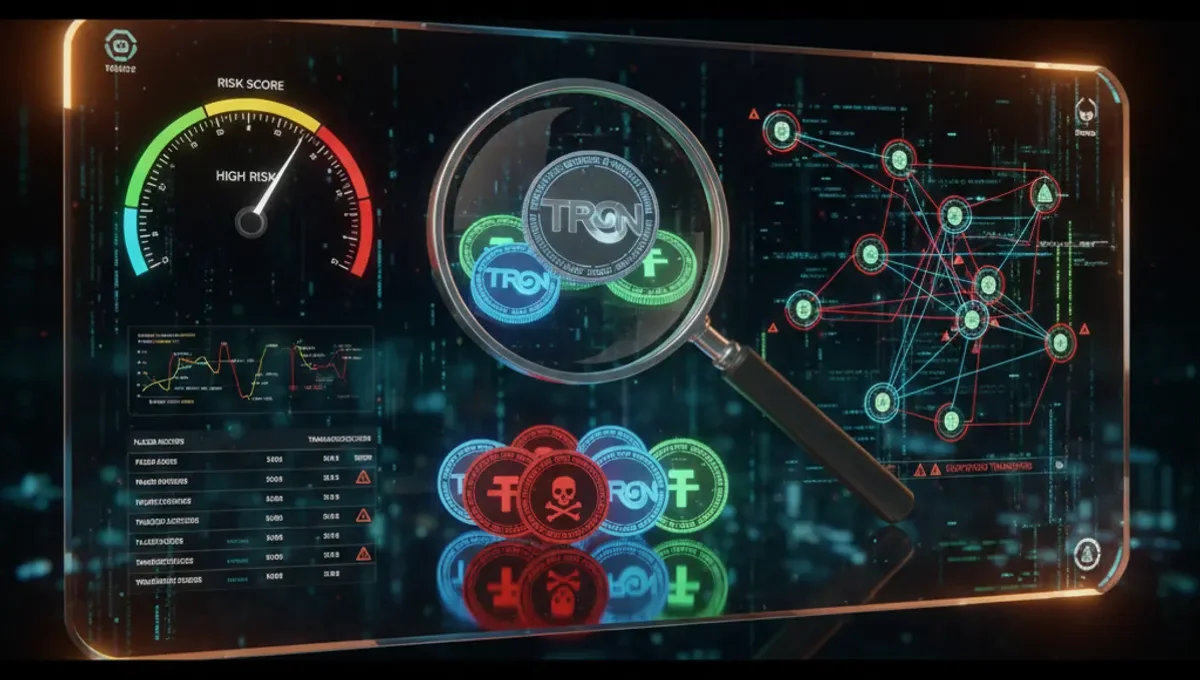
A Tron address checker is a blockchain analytics tool that examines TRX wallet addresses and transaction history to flag risk factors. It scans for connections to known sources: darknet markets, mixing services, scams, stolen funds, sanctioned entities, and gambling platforms. The tool returns a risk score—typically a numerical rating or label (low, medium, high, critical)—that indicates whether coins received from that address carry compliance or financial risk. Tron address checkers work by cross-referencing on-chain data against known blacklists and behavioral patterns. They do not reveal the owner's identity but show whether the address has been flagged by blockchain intelligence providers or law enforcement. This is distinct from a Tron address lookup, which simply retrieves balance and transaction data; a checker adds risk assessment.
How to Check a Tron Address Before Receiving Funds
To check a Tron address for risk, follow these steps:
- Obtain the sender's Tron address (a string starting with T, typically 34 characters).
- Visit a verified AML check service listed on our curated AML Services page—these providers offer Tron address checks with real-time risk scoring.
- Paste the address into the search field.
- Review the risk score and any flagged categories (mixer, darknet, sanctions, stolen funds, gambling, scam).
- Decide whether to accept the transfer based on your risk tolerance and compliance requirements.
Most services return results in seconds. Some offer free checks with limited detail; others require a subscription for full transaction history and source attribution. For businesses handling customer deposits, a paid service with detailed reporting is standard practice. Always check the sending address, not just the receiving wallet—tainted coins can be sent to any address, and receiving them may trigger exchange freezes or regulatory scrutiny.
What Do Tron Address Risk Scores Mean?
Risk scores quantify the likelihood that an address or its funds are associated with illicit activity or compliance violations. Scoring systems vary by provider, but common frameworks include:
- Low (0–20%): No known risk factors; address appears clean.
- Medium (21–50%): Minor flags or aged associations; acceptable for most use cases.
- High (51–80%): Clear risk indicators; funds may be frozen by exchanges or flagged by compliance teams.
- Critical (81–100%): Strong evidence of illicit activity, sanctions, or stolen funds; high likelihood of regulatory action.
A medium-risk score does not mean the address is malicious—it may reflect old mixer activity or a transaction with a flagged counterparty years ago. Context matters. A high or critical score warrants investigation: contact the sender, verify the transaction source, or decline the transfer. Exchanges and custodians typically freeze or reject deposits from critical-risk addresses. For businesses, acceptable thresholds depend on your compliance policy; many set a hard limit at high risk.
Tron Address Check: Common Risk Categories
When you check a Tron address, the tool flags specific risk categories that explain why a score is elevated:
- Mixers: Funds passed through coin mixing services designed to obscure transaction trails.
- Darknet Markets: Addresses linked to known darknet marketplaces or their operators.
- Stolen Funds: Coins traced to theft, hacking, or unauthorized access.
- Sanctioned Entities: Addresses on OFAC or other government sanctions lists.
- Gambling: Funds from or to gambling platforms; regulatory risk varies by jurisdiction.
- Scams: Addresses associated with Ponzi schemes, rug pulls, or fraud.
- Ransomware: Coins linked to ransomware payments or extortion.
Each category carries different compliance implications. Receiving sanctioned funds is illegal in many jurisdictions; receiving mixer-linked coins may trigger exchange review but is not inherently illegal. Stolen funds can be recovered by the original owner or law enforcement, freezing your account. Understanding the specific flag helps you assess actual risk versus false positives.
What to Do If Your Tron Address Is Flagged
If you receive a high or critical risk score on a Tron address check, take these steps:
- Do not move the funds immediately. Transfers may trigger additional scrutiny.
- Contact the sender and ask for the source of the funds. Legitimate senders can usually explain their transaction history.
- If the funds are from a known business or exchange, verify directly with them—false positives occur, especially for addresses that have received mixed transactions.
- Review the specific risk flags. A mixer flag is different from a sanctions flag; assess accordingly.
- If you operate an exchange or custody service, report the address to your compliance team and follow your internal procedures.
- If the score is critical and the source is unknown, consider rejecting the transfer to avoid regulatory exposure.
For individuals, a flagged address does not automatically mean your account will be frozen, but exchanges may review your account or request additional documentation. For businesses, flagged deposits can trigger compliance holds or account restrictions. Transparency with your service provider and clear documentation of your due diligence protects you.
Why Exchanges Freeze Tron Wallets and USDT Accounts
Exchanges freeze accounts and reject deposits when they detect tainted coins or high-risk addresses. This happens because:
- Regulatory Compliance: Exchanges must comply with AML/KYC laws and sanctions regulations. Receiving flagged funds creates legal liability.
- Risk Management: Frozen USDT or TRX from a high-risk address may be seized by law enforcement, leaving the exchange liable.
- Reputational Risk: Exchanges that knowingly process illicit funds face fines, license revocation, and public backlash.
When a Tron address check flags a deposit, the exchange's compliance system may automatically hold or reject it. You may be asked to prove the source of funds or provide additional documentation. In severe cases (sanctioned entities, ransomware), the account is permanently frozen. This is why checking a Tron address before sending or receiving is critical—once frozen, recovering funds is difficult and time-consuming. Proactive screening prevents these problems.
How to Choose a Tron Address Checker
Not all Tron address checkers are equally reliable. When selecting a service, consider:
- Coverage: Does it scan Tron (TRC20) addresses, or only Bitcoin and Ethereum?
- Data Sources: Does it use multiple blockchain intelligence providers and sanctions lists, or rely on a single source?
- Speed: Does it return results in seconds, or does analysis take hours?
- Transparency: Does it explain why an address is flagged, or just show a score?
- Pricing: Is there a free tier for basic checks, or subscription-only access?
- API Access: If you need to check many addresses, does it offer API integration?
Our curated AML Services page lists verified providers that offer Tron address checks with transparent scoring and real-time updates. Start there to find a service that matches your needs—whether you're an individual checking a single transfer or a business screening hundreds of deposits daily. Trusted services integrate with major exchanges and comply with global AML standards.
Frequently asked questions
How do I check if a Tron address is safe?
Use a Tron address checker tool to scan the address for risk flags. Paste the address (starting with T) into a verified AML service, review the risk score, and check for specific flags like mixers, darknet, or sanctions. A low or medium score indicates the address is likely safe; high or critical scores warrant caution or rejection.
What does a Tron address lookup show?
A Tron address lookup retrieves basic blockchain data: wallet balance, transaction history, and token holdings. A Tron address check goes further by analyzing that data for risk factors—tainted coins, illicit sources, sanctions exposure—and assigns a risk score. Lookup is informational; check is compliance-focused.
Can I check a Tron address for free?
Many AML services offer free Tron address checks with basic risk scoring. Free tiers typically show a risk score and top-level flags but may lack detailed transaction history or source attribution. Paid subscriptions provide comprehensive analysis. Check our AML Services page for free and paid options.
What happens if I receive TRX from a flagged Tron address?
Receiving flagged TRX may trigger exchange review or account holds. If the risk score is high or critical, the exchange may freeze your account or reject the deposit. You may be asked to prove the source of funds. In severe cases (sanctions, ransomware), the account is permanently frozen. Proactive checking prevents this.
Is checking a Tron address the same as KYC?
No. Checking a Tron address is KYT (Know Your Transaction)—screening the funds and their source for risk. KYC (Know Your Customer) verifies the identity of the person or entity. Both are part of AML compliance, but they serve different purposes. Address checking focuses on transaction risk; KYC focuses on user identity.