What Does It Mean to Check a Tron Transaction
Checking a Tron transaction means inspecting the sender's wallet address, the recipient address, the amount transferred, and the transaction hash to understand the flow of funds. On the Tron blockchain, all transactions are public and recorded on the ledger, so you can view them using a block explorer. However, visibility alone is not enough. An AML check Tron transaction goes deeper: it screens both addresses against known risk sources—mixers, darknet markets, scams, stolen funds, and sanctioned counterparties. This process is called Know Your Transaction (KYT). A tron address check reveals not just what happened, but whether the coins carry compliance risk that could affect your exchange account or regulatory standing.
How to Check Tron Address on a Block Explorer
Start by using a public Tron block explorer such as Tronscan or Tron.pro. Enter the wallet address or transaction hash into the search bar. The explorer will display the address balance, transaction history, token holdings (including USDT-Tron), and timestamps. You can see incoming and outgoing transfers, contract interactions, and the total volume moved through that address. Look for patterns: frequent transfers to mixing services, rapid movement of large sums, or transactions to known darknet market addresses are red flags. However, a block explorer shows only on-chain activity. It does not automatically flag risk sources or sanctioned entities. That is why an AML check crypto service is necessary to cross-reference addresses against compliance databases.
Step-by-Step: Running an AML Check on a Tron Address
- Identify the wallet address or transaction hash you want to verify.
- Visit a trusted AML check service (our curated AML Services list on this site includes verified providers that screen Tron addresses).
- Enter the Tron address into the screening tool.
- The service will scan the address against sanctions lists, mixer databases, darknet market records, and stolen fund registries.
- Review the risk score and detailed report. Most services assign a risk level: low, medium, high, or critical.
- Check the transaction history flagged in the report. The service will highlight which transactions or counterparties triggered the risk.
- Decide whether to proceed based on your compliance tolerance and the risk level. If risk is high or critical, consider rejecting the transfer or escalating to your compliance team.
- Document the check for your records in case of future regulatory inquiry.
Understanding Tron Wallet Address Risk Scores
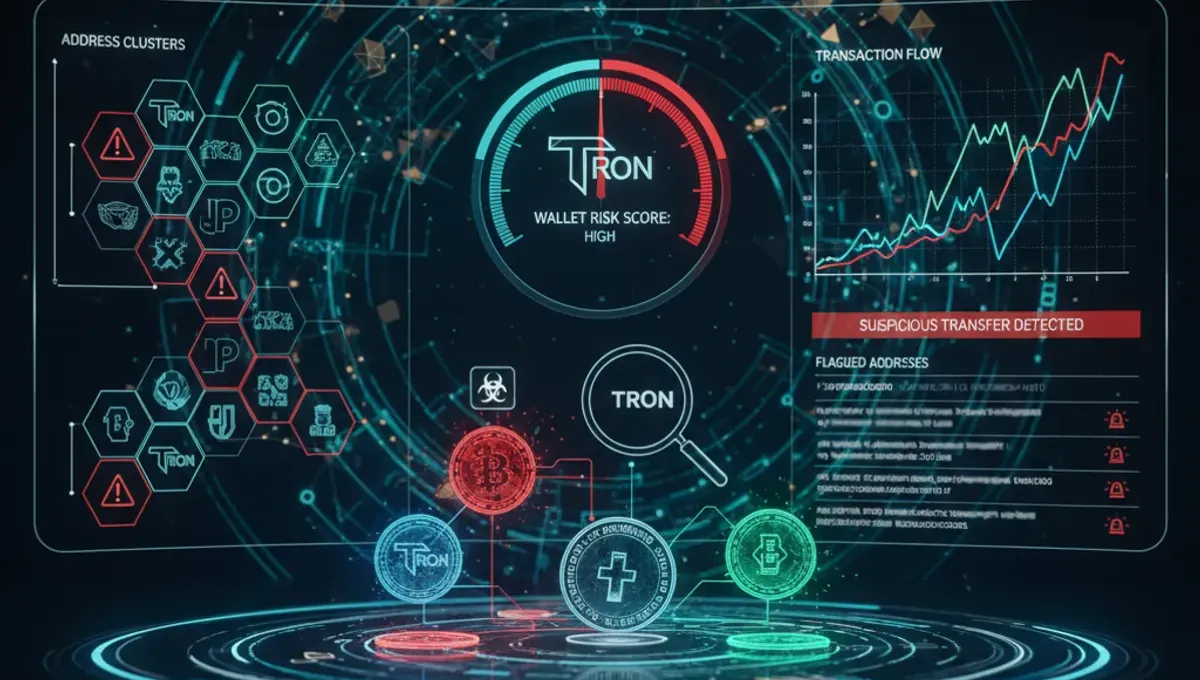
An AML check assigns a risk score to a Tron wallet address based on its transaction history and counterparty exposure. Risk scores typically range from 0 (clean) to 100 (critical risk). A low score (0–20) means the address has minimal exposure to known risk sources. A medium score (21–50) indicates some exposure to mixers or unverified counterparties but no direct darknet or sanctions links. A high score (51–80) suggests significant mixing activity, multiple transactions to high-risk addresses, or involvement in flagged scams. A critical score (81–100) means direct exposure to sanctioned entities, darknet markets, stolen funds, or active fraud schemes. Before receiving USDT-Tron or TRX, most institutional exchanges and compliance teams reject addresses scoring above 50. Individual users should be cautious with any score above 30.
Common Red Flags in Tron Transactions
Several patterns indicate a Tron transaction or address carries compliance risk. Frequent transfers to known mixing services (Tornado Cash, Railmix, or similar) suggest an attempt to obscure fund origin. Rapid movement of large sums in and out within minutes or hours can indicate money laundering or scam activity. Transactions to addresses flagged as darknet market wallets (identified by law enforcement or blockchain analytics firms) are a critical red flag. Stolen fund exposure occurs when coins are traced back to exchange hacks or wallet compromises. Sanctioned entity exposure means the address has received or sent funds to individuals or organizations on government sanctions lists. Gambling platform exposure, while not illegal, may trigger compliance holds at some exchanges. Any of these patterns warrants rejecting the transaction or escalating to your compliance officer.
What Happens If Your Tron Address Is Flagged as High Risk
If your Tron address receives a high or critical AML risk score, several consequences may follow. Exchanges may freeze your account or hold your funds pending manual review. Deposits containing flagged coins may be rejected or quarantined. Withdrawals may be delayed or denied until you provide documentation of the fund source. In severe cases (direct sanctions or darknet exposure), exchanges may permanently close your account and report the activity to financial authorities. If you receive tainted coins unknowingly, contact your exchange's compliance team immediately. Provide documentation of the transaction, explain that you were unaware of the risk, and request a review. Cooperation and transparency improve your chances of account reinstatement. Do not attempt to move the coins to another exchange; this may be interpreted as money laundering and worsen your situation.
Best Practices for Checking Tron Transactions Before Receiving Funds
Always verify a Tron address before accepting a large transfer. Request the sender's wallet address in advance and run an AML check crypto screening on it. Use services from our verified AML Services list on this site to ensure accuracy and compliance-grade reporting. Set a risk threshold for your organization (e.g., reject any address scoring above 30 or 50) and enforce it consistently. Document every check you perform, including the date, address, risk score, and your decision. If the sender is a known business partner or exchange, cross-reference their official wallet address on their website or support channel to avoid address spoofing. For USDT-Tron transfers, check both the sender address and the token contract address to ensure legitimacy. If you operate an exchange or custodian, integrate AML screening into your deposit workflow so users cannot receive flagged coins. Educate your team on common red flags so they can escalate suspicious transactions quickly.
Frequently asked questions
Can I check a Tron transaction for free
Yes, you can view any Tron transaction on a public block explorer like Tronscan for free. However, a free block explorer only shows on-chain data. For a full AML check that screens against sanctions lists, mixers, and darknet databases, you typically need a paid service. Some AML providers offer limited free checks; see our AML Services page for options.
What is the difference between checking a Tron address and checking a transaction
Checking a Tron address means inspecting a wallet's overall history, balance, and activity. Checking a transaction means examining a specific transfer event (sender, recipient, amount, hash). To assess risk, you check both the sender and recipient addresses involved in the transaction, then run an AML check to flag any compliance exposure.
How long does an AML check on a Tron address take
Most AML check services return results within seconds to a few minutes. The screening compares the address against pre-built databases of sanctions lists, mixers, and darknet markets. Instant results are standard for automated checks. If a manual review is required, it may take hours or days depending on the service and the complexity of the address history.
What should I do if I receive USDT-Tron from a high-risk address
Contact your exchange or custodian's compliance team immediately. Provide the transaction hash and explain that you received the coins unknowingly. Do not attempt to move or trade the coins, as this may trigger additional compliance holds. Cooperate fully with any investigation. Most exchanges will either quarantine the coins pending review or allow you to return them to the sender.
Can a Tron address be delisted or frozen by exchanges
Yes. If an address is flagged as sanctioned, involved in darknet activity, or linked to stolen funds, exchanges may add it to their internal blocklist and reject deposits from it. The address itself is not frozen on the blockchain (Tron is decentralized), but exchanges can refuse to process transactions involving that address. This is why checking a Tron address before sending or receiving funds is critical.